
Introduction to Ayurveda: Ancient Wisdom for Modern Wellness
Ayurveda often shows up in yoga classes, wellness retreats, and Instagram captions. But what is it really? More than just herbal remedies or oil massages, Ayurveda is a system of natural health that has been practiced for over 5,000 years in India.
What is Ayurveda and why does it matter?
The word “Ayurveda” comes from two Sanskrit terms: ayur (life) and veda (knowledge). It literally means “the knowledge of life” – not just how to avoid disease, but how to feel well in yourself, in your body, every day.
While modern medicine often focuses on treating illnesses after they appear, Ayurveda emphasizes preventing imbalances before they manifest as disease. At its core, it’s about finding balance: between body and mind, digestion and rest, change and routine.
In our fast-paced, information-overloaded world, we’re constantly bombarded with conflicting health advice: “Eat keto!” “No, go plant-based!” “Wake up at 5 AM!” “Actually, sleep in and follow your natural rhythms!” The contradictions are endless, leaving many people frustrated and confused.
Ayurveda offers something different: personalized guidance based on your unique constitution rather than one-size-fits-all recommendations. This ancient wisdom provides a framework for understanding individual needs and achieving balance – physically, mentally, and spiritually.
According to Ayurveda, true health includes:
- Balanced doshas (the three body-mind energies)
- Strong digestion
- Proper elimination
- A joyful mind and calm senses
In other words, you’re healthy when your body works well and you feel good living in it.
Ancient Indian physician Charaka, one of the principal founders of Ayurveda, summed up its purpose simply: to protect the health of the healthy, and to treat the disease of the sick. This principle still guides our approach at Purple Valley, where Ayurvedic treatments are designed not just to fix problems, but to build resilience.
Your Unique Constitution: Meeting the Three Doshas
At the heart of Ayurveda lies the understanding that everything in the universe – including our bodies – is composed of five fundamental elements:
- Space (Akasha): Found in the cavities within your body, like your mouth, nose, and lungs
- Air (Vayu): Governs all movement, from your breathing to your blood circulation
- Fire (Tejas): Responsible for digestion, metabolism, and your body temperature
- Water (Jala): Present in your bodily fluids, from saliva to blood
- Earth (Prithvi): Provides structure and stability, like your bones and muscles
These aren’t just abstract concepts. They represent tangible energies that shape our physical and mental states. When in balance, they create harmony. When imbalanced, they can lead to discomfort and disease.
These five elements combine to form three primary energetic principles called doshas: Vata, Pitta, and Kapha. These doshas govern all physical and mental processes and determine your unique constitution.
Here’s a simple way to understand them:
Vata (Air + Space): Think of Vata as the wind. It governs movement and creativity. When in balance, Vata types are energetic, creative, and flexible. When imbalanced, they might experience anxiety, dry skin, and irregularity.
Pitta (Fire + Water): Pitta is like fire. It controls digestion, metabolism, and transformation. Balanced Pittas are intelligent, ambitious, and warm. Imbalanced Pittas might experience irritability, inflammation, and overheating.
Kapha (Earth + Water): Kapha is like earth. It provides structure, stability, and lubrication. Balanced Kaphas are calm, loving, and grounded. Imbalanced Kaphas might experience sluggishness, weight gain, and excessive attachment.
While everyone has all three doshas, most of us have one or two that are more dominant. This unique proportion determines our Prakriti – our inherent constitution that remains relatively constant throughout life.
Beyond Theory: How Ayurveda Translates to Daily Life at Purple Valley
At Purple Valley Goa, Ayurveda isn’t just a spa treatment. It’s a rhythm, a lifestyle, and a way of returning to what already works for us.
Starting 2025, we’ve started offering Ayurveda retreats at Purple Valley Goa where we’ve created a unique environment where guests can experience the benefits of Ayurveda firsthand, especially during our special monsoon season retreats. Our ayurveda retreats are planned to help you feel more balanced – not just through diet or massage, but by giving you time, space, and support to let your system recalibrate.
According to Ayurvedic tradition, Varsha Ritu (monsoon season) is the best time for healing and rejuvenation (more on this in an upcoming blog post!). The humidity softens the body and opens the pores, making treatments more effective. The natural environment during this time enhances the healing process in ways that simply aren’t possible during other seasons.
A typical day during an Ayurvedic retreat at Purple Valley includes:
- Morning: Yoga Practice either in form of gentle Mysore style or Hatha Yoga, followed by breakfast
- Mid morning: Ayurvedic treatments
- Lunch time: Light lunch
- Early afternoon: Time to rest and digest
- Late afternoon: Afternoon tea and Ayurvedic treatemnt
- Evening: Light dinner and early bed time.
Our integrated approach combines authentic Ashtanga yoga practice with personalized Ayurvedic treatments designed to balance your specific constitution. Whether you’re looking to deepen your yoga practice, address specific health concerns, or simply reset your system, our expert practitioners create a personalized plan to guide you toward optimal wellbeing. You can read more about our monsoon Ayurveda program here.
Many guests at Purple Valley notice subtle but significant improvements after incorporating Ayurvedic principles into their routines. Sleep becomes deeper, digestion more efficient, and energy more consistent.
Frequently Asked Questions About Ayurveda
Before we wrap up, let’s address some common questions and misconceptions:
Is Ayurveda scientific or spiritual? Both. It’s grounded in thousands of years of observation and practice, and increasingly backed by modern research, especially around gut health, stress, and detoxification. While ancient in origin, many Ayurvedic principles are now validated by modern science.
Is Ayurvedic treatment slow and ineffective? While Ayurveda focuses on long-term sustainable health, many practices provide immediate relief while addressing root causes. Rather than viewing it as “slow,” think of it as “thorough”, treating both symptoms and their underlying imbalances.
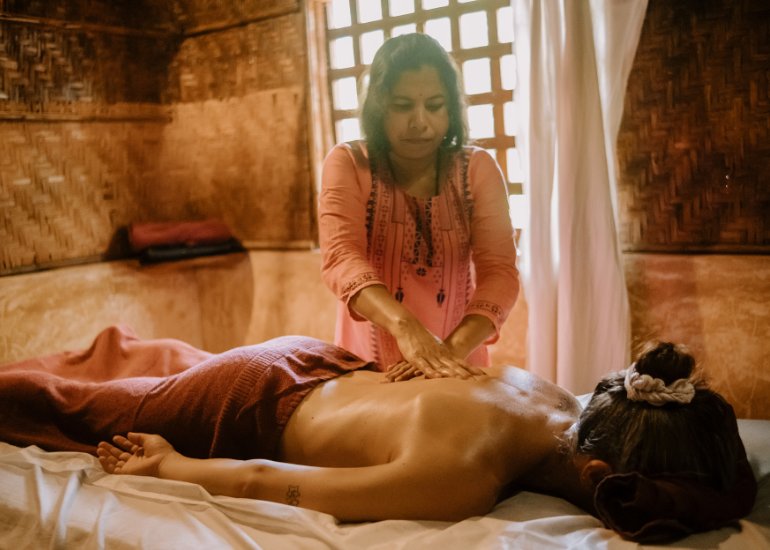
Is Ayurveda just about oil massages? No. Massage (abhyanga) is just one small aspect of Ayurveda, which encompasses diet, lifestyle, herbs, and much more. At Purple Valley, we offer a wide range of therapies including herbs and oils, dietary guidance, daily routine adjustments, and various bodywork techniques.
Do I need to follow a strict diet? Not at all. Ayurveda is flexible. It’s about small shifts, not big restrictions. At Purple Valley, meals are designed to suit your dosha and the season while still being delicious and satisfying.
Do I need to be vegetarian to practice Ayurveda? While Ayurveda emphasizes a plant-based diet, it’s adaptable to various eating patterns based on individual needs. The focus is on eating according to your constitution rather than following rigid rules.
Is it safe for everyone? When guided by qualified professionals, yes. That’s why all Ayurvedic treatments at Purple Valley begin with a consultation to ensure the therapies are appropriate for your specific condition.
Key Takeaways
|
Begin your Ayurvedic Journey
Ready to begin your Ayurvedic journey? Here are three simple steps:
- Observe and adjust: Pay attention to how different foods, activities, and practices affect you
- Start small: Incorporate one or two Ayurvedic practices into your daily routine
- Learn more about Ayurveda treatments at Purple Valley during the Monsoon season: our expert practitioners create a personalized plan to guide you toward optimal wellbeing.
- Learn your dominant dosha: Take our dosha quiz (coming in our next blog post!) or schedule a consultation with one of our Ayurvedic practitioners
Remember, Ayurveda isn’t about perfection. It’s about awareness and gradual improvement. Small, consistent changes often yield the most sustainable results.
What makes Ayurveda so powerful is that it’s incredibly practical. It’s not just about understanding concepts – it’s about applying them to improve daily life.
Learn more about Purple Valley’s ayurveda retreats here.
From the Purple Valley team. Our collective experience in Ashtanga yoga and Ayurvedic practices spans decades, with our resident teachers dedicated to helping guests deepen their understanding of these complementary traditions.