
From Conditioning to Conscious Choice
1 week retreat with Delara Tiv
9 January to 16 January 2027
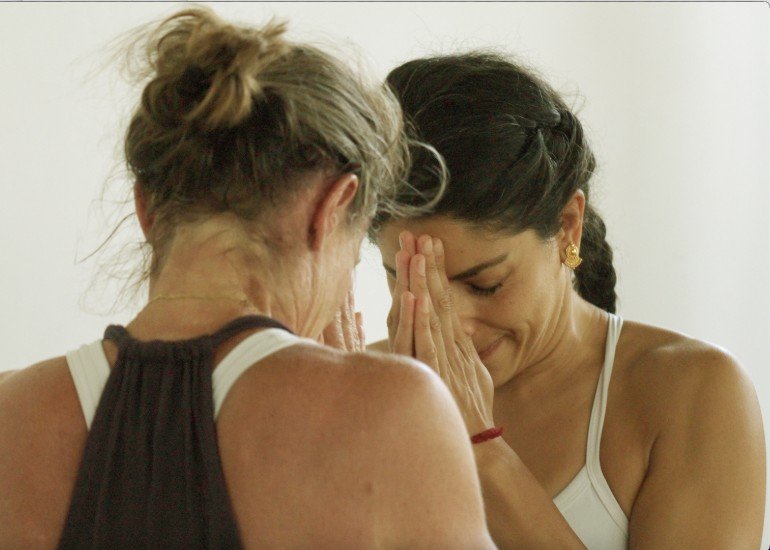
Awareness - Discernment - Skill in Action
This retreat welcomes practitioners with different levels of experience and from different practice traditions. Ashtanga, Black Lotus, Rocket and Vinyasa Krama practitioners are welcome to practise their own sequences within the Mysore-style setting. The particular sequence we practise is not the central concern. What matters is the quality and intention behind our practice, the attitude we bring to it, and the kind of student and practitioner we choose to be.
Do we move through many postures without fully inhabiting them, rushing, forcing or losing the relationship between breath and movement? Or are we willing to slow down, refine our technique, coordinate breath and movement, and move with greater grace, precision and awareness? Can we move beyond simply completing a sequence and deepen our experience of how we move, breathe, sense and respond? Are we willing to develop our proprioception and interoception, remain receptive to guidance and revisit the fundamentals with curiosity and a beginner’s mind? Whatever sequence we practise, the essential questions remain the same: What quality of awareness are we bringing to it? What are we reinforcing through the way we practise? Who is meeting the practice, and how?
Each practice will be guided and adapted according to the practitioner’s experience, capacity, health and circumstances. The mat becomes a microcosm in which we can observe how conditioning shapes our perception, thoughts, emotions and responses. It reveals how we respond to frustration, discomfort, injury, limitation or the feeling of being stuck. Do we force, avoid or become discouraged, or can we pause, reassess and develop a skilful strategy for meeting the obstacle before us? When these patterns remain unexamined, we may continue making the same choices and encountering similar outcomes, both on and beyond the mat, even when we consciously want something to change. Before a pattern can be changed, it must first be recognised. Āsana gives us an immediate place to investigate. What might a familiar posture reveal about physical, mental or emotional reactions that have become so deeply ingrained that we no longer recognise them as choices?
Drawing on Patañjali’s teachings, we will use āsana, mudrā, prāṇāyāma, meditation and practical inquiry as tools for observing our conditioning. We will learn to discern which patterns support us and begin to rewire thoughts, actions and reactions that no longer serve us or repeatedly get in our way. The purpose is not to eliminate all conditioning, but to become more aware of what is operating within us, create space around our habitual responses and, when necessary, choose differently.
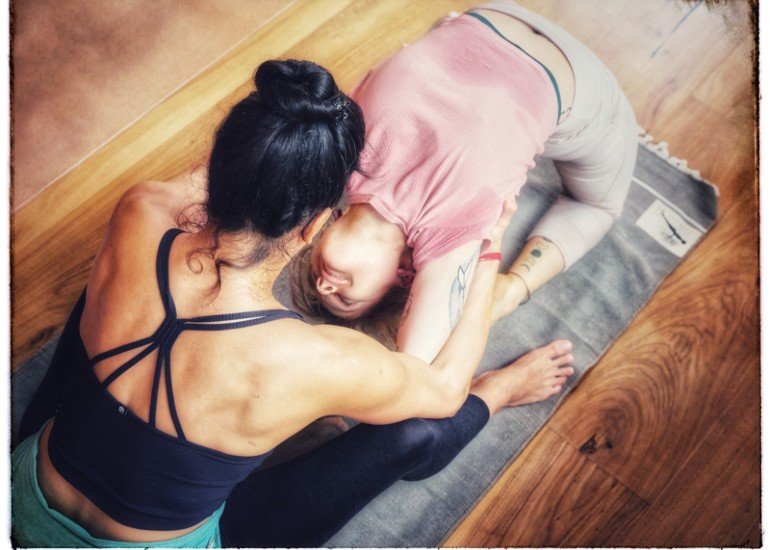
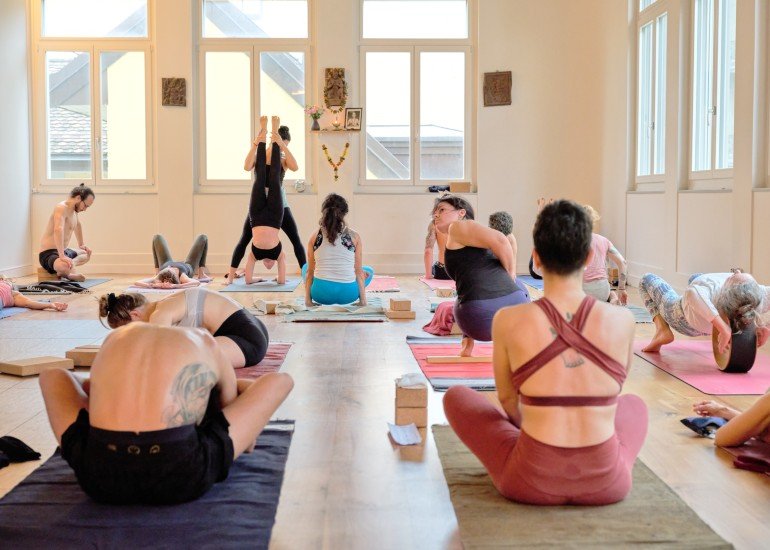
What to expect from the retreat and Retreat Schedule
• Individually guided āsana practice in a Mysore-style setting
• Kriyā, mudrā and prāṇāyāma practices
• Yogic meditation
• Practical exploration of movement, attention and recurring patterns within familiar postures
• Selected teachings from Patañjali’s Yoga Sūtras and the Bhagavad Gītā
• Talks and reflective exercises connecting practice with our choices, relationships and daily lives
• Space to investigate which patterns support greater clarity, new possibilities, freedom, and which repeatedly create limitation or sufferingWhat are you continually reinforcing? What are you ready to cultivate? What becomes possible when a familiar pattern is no longer mistaken for the only possibility?
Daily schedule
7:15 to 9:15 | Mysore practice: āsana Individually guided practice in a Mysore-style setting. Practitioners who have not memorised their sequence are welcome to use a practice sheet.
9:30 to 10:30 | Wisdom teachings and prāṇāyāma
16:00 to 18:00 | Four afternoon workshops
21:00 to 21:30 | Silent Meditation (Optional
Retreat Schedule
• 6:30 pm – Dinner & Welcoming Talk + Meditation
Sunday, 10 January
• 7:15–9:15 am – Mysore
• 9:30–10:30 am – Wisdom teachings - Pranayama - Meditation
• 11:00 am – Brunch
• 4:00–6:00 pm – Functional Anatomy of the Legs Biomechanics of the Feet & Ankle – Stability & Support through the Lower Limbs
• 6:30 pm – Dinner
9:00- 9:30 – Evening Sitting Meditation (optional)
Monday, 11 January
• 7:15–9:15 am – Mysore
• 9:30–10:30 am – Wisdom teachings - Pranayama - Meditation
• 11:00 am – Brunch
• 4:00–6:00 pm – Art Of Vinyasa
• 6:30 pm – Dinner
• 9:00- 9:30 – Evening Silent Meditation (optional)
Tuesday, 12 January
• 7:15–9:15 am – Mysore
• 9:30–10:30 am – Wisdom teachings - Pranayama - Meditation
• 11:00 am – Brunch
• Free Afternoon (No Class)
• 6:30 pm – Dinner
• 9:00- 9:30 – Evening Silent Meditation (optional)
Wednesday, 13 January
• 7:30–9:30 am – Mysore
• 9:45–10:45 am – Chanting, Pranayama & Meditation
• 11:00 am – Brunch
• 4:00–6:00 pm – Biomechanics of the ArmsHealthy Chaturanga – Jump Back & Jump Through
• 9:00- 9:30 – Evening Silent Meditation (optional)
Thursday, 14 January
• 7:15–9:15 am – Mysore
• 9:30–10:30 am – Wisdom teachings - Pranayama - Meditation
• 11:00 am – Brunch
• Free Afternoon (No Class)
• 6:30 pm – Dinner
• 9:00- 9:30 – Evening Silent Meditation (optional)
Friday, 15 January
• 7:15–9:15 am – Mysore
• 9:30–10:30 am – Wisdom teachings - Pranayama - Meditation
• 11:00 am – Brunch
• 4:00–6:30 pm – Fascial Chains & BackbendsDeveloping Flexibility, Support & Strength for a Sustainable Backbend Practice
• 6:30 pm – Dinner
• 9:00- 9:30 – Evening Silent Meditation (optional)
Saturday, 16 January
• No Morning Class
• Breakfast from 9:00 am
• Departure / Travel Home
Workshop Details
The afternoon workshops bring together biomechanics, functional anatomy, movement education and principles from Rolfing® Structural Integration. We will explore how coordination, perception and imagery influence the quality of movement, and how clear, progressive strategies can support the development of more complex postures without sacrificing precision, ease or sustainability.
Wisdom teachings and physical practice will not be treated as separate subjects. The mat becomes a microcosm in which these teachings can be observed and explored through action. How do we respond to difficulty, discomfort and uncertainty? Do we rush, force, avoid or repeat familiar patterns? Can we remain receptive enough to learn? The way we approach action on the mat can reveal how we approach challenges, choices and change beyond it. Each workshop will therefore examine both the biomechanics of what we practise and the attention, intention and quality of effort we bring to it.
Stability and Support through the Lower Limbs
• Explore the functional fascial relationships connecting the feet, legs, pelvis and spine.
• Develop the arches of the feet as dynamic foundations for distributing weight and transmitting support through the body.
• Refine alignment within the standing sequence according to each practitioner’s individual structure.
• Cultivate stability through a more intelligent and responsive relationship with the ground rather than through stiffness or excessive effort.
Vinyasa: Conscious Action, Precision and Efficiency
• Explore wisdom teachings through breath, posture and transition, rather than as ideas separate from physical practice.
• Work with the principle that preparation shapes action. How we organise ourselves before entering a posture influences the quality and efficiency of the movement that follows.
• Refine how we enter and leave each āsana, recognising that the exit from one posture creates the conditions for the next.
• Develop greater precision in alignment, timing and transitions to reduce unnecessary effort and the risk of injury.
• Explore Vinyasa as conscious and intentional action rather than mindless repetition.
Caturaṅga Daṇḍāsana, Jumping Back and Jumping Through
• Examine the functional anatomy, movement perception and fascial relationships of the shoulder girdle.
• Refine Caturaṅga Daṇḍāsana by developing clearer joint organisation and more effective muscular support.
• Explore how to stabilise the shoulders while building strength for arm balances and weight bearing transitions.
• Approach jumping back and jumping through through progressive coordination rather than brute strength.
• Develop greater strength, lightness and longevity within the practice.
Sustainable Back-bending
• Explore the functional anatomy of the spine and the structures that support or limit extension.
• Consider how fascial relationships and the diaphragm contribute to breathing, spinal support and back-bending.
• Examine how each person's unique body and morphology influences flexibility, mobility, strength, limitation and progression.
• Improve mobility through the thorax, hips and shoulders so that extension can be distributed more evenly.
• Learn to backbend in a way that is strengthening and invigorating rather than repeatedly compressing and degenerating the lumbar spine.
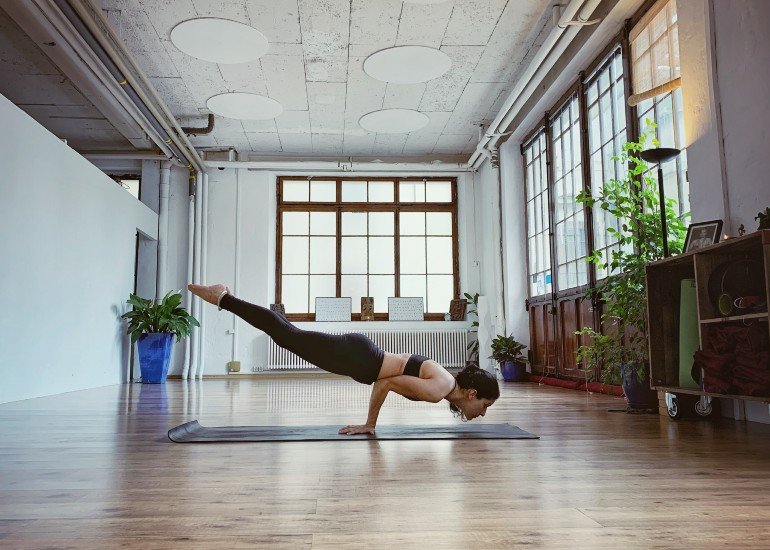
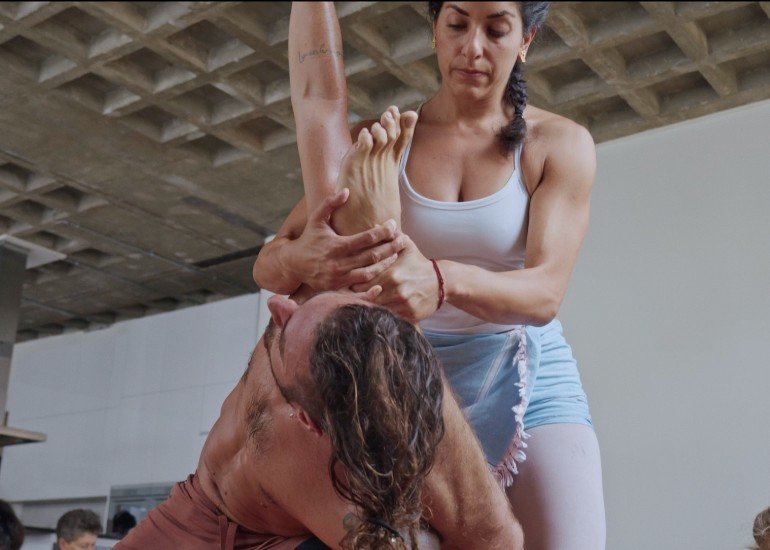
About the Teacher
Delara Tiv began practising Ashtanga Yoga at the age of 23 with Borja Romero while living in Madrid during her professional dance career. The teachers who later most influenced the course of her practice and the way she shares Ashtanga Yoga are Rolf Naujokat, David Garrigues and Gregor Maehle.
During a season of study with Rolf Naujokat, a lengthy daily practice of prāṇāyāma marked a decisive turning point in her life, leading her to leave her dance career and to study Rolfing®Structural Integration.
Delara began teaching Ashtanga Yoga at the age of 33, after a decade of only being a student and receiving; devoted to practising and studying the method. Delara is an Advanced Certified Rolfer® and movement educator whose work brings together Ashtanga Yoga, Structural Integration and a lifetime of movement study. She has worked internationally with dancers and athletes, including touring with Alvin Ailey American Dance Theatre as a Rolfing therapist.
In her daily clinical practice, she works with chronic pain, structural& functional limitations, postural fixations, injury, illness and post-surgical rehabilitation. When appropriate, patients are introduced to āsana, prāṇāyāma and meditation as practical ways of supporting greater balance and agency in their lives. This clinical experience enables Delara to preserve the integrity and rigour of Ashtanga Yoga while responding intelligently to different bodies, conditions, constitutions, ages and stages of life. Her approach continues to be enriched by her ongoing studies in the Neijing tradition of Chinese medicine.
Of Persian origin and an immigrant since age 12, Delara has lived across three continents. Moving between different languages and cultures has profoundly shaped the way she perceives, learns and teaches. After many years of travelling internationally as a dancer and living abroad, she now resides in, Switzerland, where she founded Ashtanga Yoga Vevey in 2018 and continues to share her work through teaching, therapy and ongoing study. She considers herself first and foremost an eternal student, committed to allowing practice, experience and continued study to shape what she shares.
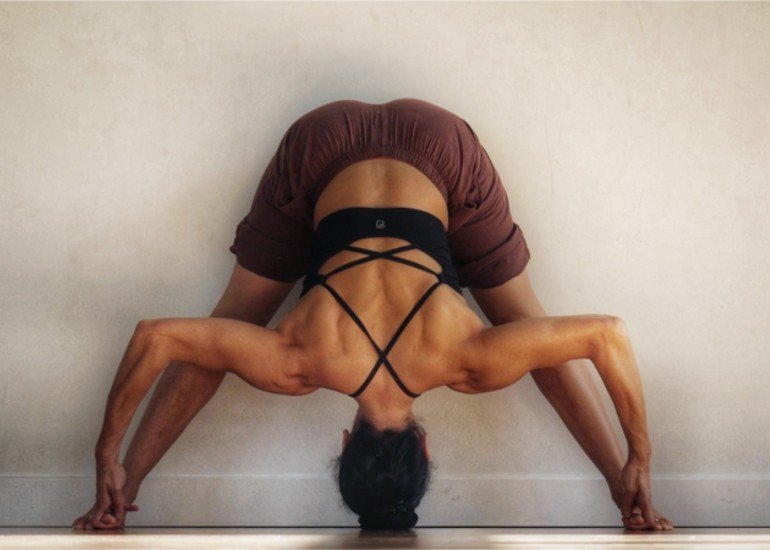
Practical Information About The Retreat Centre
Our retreat centre, Finca Naranjas (previously known as Cristoforo), is a simple yet deeply beautiful sanctuary nestled in the heart of South Tenerife. It was lovingly designed by architect Denis Devaris, who envisioned it as a meeting place for spiritual seekers. Built slowly over the course of 30 years using volcanic rock from the island, each room carries its own unique charm, full of character, thoughtful details, and personal touches.
As with many soulful spaces, a little imperfection is part of the experience. The plumbing system may not be up to modern standards, but the buildings are deeply rooted in the land and surrounded by a lush, thriving garden. Finca Naranjas truly feels like a hidden oasis.
If you're joining us during the cooler months (December - March), please be sure to pack some warmer layers. Mornings and evenings can be quite chilly, and while the rooms aren’t heated, they are equipped with cozy duvets and plenty of blankets to keep you comfortable.
Please note that the internet connection at the retreat center is currently not reliable. If you depend on internet access for work, we recommend bringing mobile data on your phone, which you can use to create a hotspot for your laptop if necessary. Mobile phone reception in the area is strong and consistent.
There is also a café about 10 minutes from the retreat with a reliable internet connection. However, it tends to be busy and may not be the most suitable environment for focused work.
Our meals are prepared with love by our wonderful retreat chefs, offering fresh, wholesome dishes that are entirely vegetarian and mostly vegan. Wherever possible, we use local and organic ingredients to support both your wellbeing and the surrounding environment. Occasionally, eggs or dairy may be included in some meals.
If you have any food allergies or sensitivities, please let us know in advance. Gluten-free options are available.
We also have a self-service tea and coffee station available throughout the day, and we do our best to provide fresh fruit for light snacking between meals. You’re welcome to enjoy your meals either indoors or outside in the peaceful beauty of our garden.
Our retreat offers an intimate practice setting, with a maximum of 25 students and morning classes limited to 16 participants for a more personal experience.
Sessions are held in our beautiful wooden garden Shala. During full retreats, Savasana is often enjoyed outdoors to create space in the Shala, and some afternoon workshops may also take place outside.
Please pack warm layers for practice, especially for Savasana, as mornings and evenings can be chilly.
Rooms will be ready from 3:00 PM on arrival day. The retreat begins with a welcome meeting at 6:00 PM, followed by dinner at 6:30 PM. We kindly ask all students to arrive in time for the introduction.
Our first practice session takes place on Sunday morning, and the final practice is on Friday morning. Check-out is on Saturday at 9:00 AM.
Accommodation
Please find below the available accommodation options, along with the pricing. You can find pictures of the rooms by following the link in room category titles below.
Premium Rooms
Premium Rooms are the most spacious and comfortable accommodation option at the retreat, featuring larger interiors and private indoor bathrooms.
Single: 1600 GBP/week
Available: Casita 1, Casita 2
Shared: 1350 GBP/week
Available: Danae 1, Venus, Casa Blanca
Standard Rooms
Standard Rooms are more compact than the Premium Rooms while still offering a comfortable stay. Most include attached indoor bathrooms, while Bella Durmiente and Ficus feature outdoor bathrooms. La Granja consists of two rooms sharing one bathroom.
Single: 1500 GBP/week
Available: Pino de Oro, 6 Peldanos
Shared: 1250 GBP/week
Available: 5 Peldaños ( 1 female spot left) , La Granja
Budget Rooms
Budget Rooms offer a simpler accommodation option with shared bathroom facilities and may experience some light noise from the nearby road.
Single: 1400 GBP/week
Available: Fuente 1
Shared: 1200 GBP/week
Week 2 - Available: Fuente 2
Community Rooms
Community Rooms accommodate up to three guests of the same sex in a shared space designed for a more social and affordable retreat experience.
Shared: 1100 GBP/week
Available: Danae 2 (3 spots)
Shared: 1000 GBP/week
Available: La Huerta (2 spots, female)
The accommodation price is all-inclusive, covering your stay, all meals, and yoga sessions. To secure your place, you can pay a 50% deposit of the total amount. Please note that the deposit is non-refundable, and the remaining balance must be paid at least 4 weeks before the start date.
Please note that single rooms are limited for this retreat. Before booking, kindly confirm availability by contacting us at info@yogagoa.com.
Please use the link below to reserve your spot for the retreat!

Book this retreat
To book this retreat, complete the form on our Make A Payment page